Last update October 8, 2026 by Alberto Llopis
Abedi Pele He approaches the flag and places the ball. Munich, 26 May 1993. Olympique de Marseille is playing against Milan in a final that could change the history of the club. The Ghanaian raises the center, Basile Boli finishes and an entire city finds an image to cling to forever.
In the photographs of the goal, Boli's head usually rules. A little before is Abedi's left foot. That distribution of memory fits too well for a huge footballer, decisive and, outside certain places, less remembered than it deserves.
Africa won with Ghana, He conquered Europe with Marseille and never played in a World Cup. His story belongs to a time when one could be a continental figure without appearing every weekend on every screen on the planet..
Abedi Ayew before becoming Abedi Pelé
His name was Abedi Ayew. The nickname Pelé spoke of admiration for the Brazilian, but he ended up identifying a footballer with his own voice. He didn't need to look like anyone when he received between the lines and turned on his left leg.
His first important steps were linked to Real Tamale United of Ghana. The subsequent race was not a direct highway to a European giant. There were changes of country, intermediate steps and an arrival in France through Niort and Mulhouse before reaching Marseille.
This journey matters because it dismantles the retrospective image of a star destined from the beginning for the big stage.. Before the finals and awards there were much less visible teams. had to play, adapt and get someone to pay attention.
Marseille incorporated him into 1987, but his consolidation came after a stage at Lille. came back in 1990 to a club that wanted to rule in France and win in Europe. This time it was going to take center stage.
A left foot that does not fit in the word power
African football has suffered from too many lazy descriptions: force, speed, physical capacity. Abedi forces us to expand our vocabulary. His game had dribbling, reading space and a special ability to receive with your back turned and leave oriented.
He could start with the ball close to his foot, brake and accelerate again. The difficult thing for the rival was to find out when the deception had ended. No ostentatious gesture was necessary.; A tilt of the body was enough to open a passing lane.
In a time when much more contact was tolerated, Protecting the ball was also a form of resistance. His actions had that balance between delicacy and firmness that distinguishes good playmakers.: accept the opponent's proximity without giving up the next play.
Maestro's nickname cannot be understood by adding only his goals. You had to observe what was happening around you after you touched the ball.
Waddle, Papin and the nights of the Vélodrome
That Marseille had a lead that still works as a password among fans of a certain age: Chris Waddle, Jean-Pierre Papin y Abedi Pelé. The English dribble, the Frenchman's finishing and the Ghanaian's ability to connect the pieces.
Bernard Tapie's club had ambition, signings and an enormous demand. For the spectator, the white t-shirts remained, the noise of the Vélodrome and the feeling that something could happen as soon as the ball found one of the three.
In 1991 They reached the European Cup final in Bari. Red Star resisted and won on penalties after the 0-0. For a team built to lift that trophy, Getting there and being a few pitches away was no small frustration..
The Bari defeat is as much a part of Abedi's memory as the subsequent victory. The careers of the greats are not only made up of the night when everything goes well. They also contain close matches, occasions that do not arrive and a drink that leaves in other hands.
1993: the corner that changed the history of Marseille
Two years later the team had changed. Papin and Waddle were gone.; they had arrived, among others, Rudi Voeller, Alen Bokšić and Marcel Desailly. Abedi was still there. Raymond Goethals led the team that had to face Fabio Capello's Milan.
The rival imposed due to their names and their route. Marseille needed concentration to resist and quality to take advantage of their opportunity. He found her shortly before the break: corner kick from Abedi and header from Boli. It was the only goal.
The 1-0 made OM the first French club to champion Europe and the winner of the first edition under the name Champions League. The celebration had the weight of what had escaped in Bari.
The joy was marred by the corruption case related to the league match against Valenciennes. The sanctions arrived and the withdrawal of the French title of 1992/93, although the European title remained. That season left Marseille with the most desired cup in its showcases and a crisis that would change the course of the club..
For Abedi, That night he left a concrete and indisputable intervention: the goal ball came off his left foot.
Ghana 1982 and the final that he could not play in 1992
With Ghana he had been African champion in 1982, when he was still beginning his international journey. Ten years later he was already the reference of the Black Stars and one of the biggest names on the continent..
Africa Cup 1992, a Senegal, summarizes one of the most painful contradictions of his career. He was voted best player of the tournament and helped Ghana reach the final, but he missed it due to suspension after accumulating a second yellow in the semifinals.
Ghana faced Ivory Coast without him. The match ended 0-0 and the Ivorians won by 11-10 in a very long penalty shootout.
He had helped lead the team to the last game and could no longer intervene. Ghana needed his imagination precisely when he was away. The runner-up medal and the best player award were linked to a final that was never played.
That Ghana also had Anthony Yoboah. The individual talent was extraordinary. Converting it into national team victories was much more difficult.
Three African Ballon d'Ors, with an important nuance
Abedi Pelé won France Football's African footballer of the year award in 1991, 1992 Y 1993. That is the series of three consecutive awards that usually appears in his biography.
The CAF began to present its own award in 1992 and Abedi won that first edition. In 1993 the CAF winner was Rashidi Yekini, while France Football chose the Ghanaian again. Talking about three consecutive CAF awards would be incorrect.
Precision allows you to better appreciate your recognition: different votes agreed to place him in the elite. And they did it in years of enormous footballers, before he George Weah's Ballon d'Or in 1995 will mark another defining moment for Africa.
The great absentee from the World Cups
Abedi never played in a World Cup finals. Ghana failed to qualify during their career and debuted in the tournament in 2006, when he had already retired.
This absence conditions international memory. For many fans, The World Cup was the gateway to footballers who they could barely see the rest of the year. Roger Milla had that showcase. Abedi had to build his recognition in other ways.
Hence the meaning of talking about a great African footballer before the global era.. It wasn't the first: Before and at his side there were fundamental figures like Milla, Madjer or Weah himself. But his career took place before the permanent availability of matches, videos and statistics that today make familiar to a player located thousands of kilometers away.
Being less visible did not mean being less good. It meant that to discover it you often had to wait.
After Marseille, a surname that continued to play
After OM came Lyon, Torino, 1860 Munich and Al Ain. The highest point of his European career had been in Marseille, but his career continued in different championships.
Later, André and Jordan Ayew took the family name to the World Cups that their father had not been able to play in. André was in South Africa 2010; both met in Brazil 2014 and Qatar 2022. The story of a family brought together two eras of Ghana.

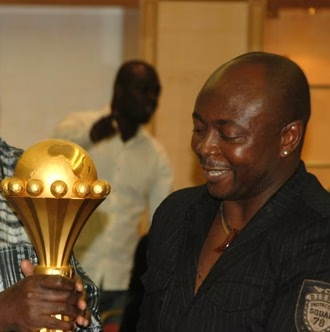
Photos of Abedi after retiring show another man, street dress, far from the entrances and the finals. That's why it's worth going back to the video.. The player is still there: receive, tour, attracts a rival and leaves a partner free.
And in Munich, just before the image that everyone remembers, approaches the flag again.
Frequently asked questions about Abedi Pelé
Was Abedi Pelé a relative of the Brazilian Pelé?
No. His name is Abedi Ayew and Pelé was his football nickname.
Did you win the Champions League?
Yes. He was champion with Olympique de Marseille in 1993 and took the corner that Basile Boli converted into the goal of the final against Milan.
How many African Ballon d'Ors did he win??
Three in the France Football vote: 1991, 1992 Y 1993. He also won the CAF award for 1992.
Why didn't he play in any World Cup??
Why Ghana did not qualify during their international career. His World Cup debut came in 2006, after Abedi's withdrawal.
Sources and photographs
Article contrasted with the official history of Olympique de Marseille, the Champions League archive 1993 from UEFA, FIFA's profile on African legends without a World Cup, the differentiated honors of France Football and the CAF compiled by RSSSF, the results of the African Cup of 1992, L'Équipe's file on his sanction Y your season sheet.
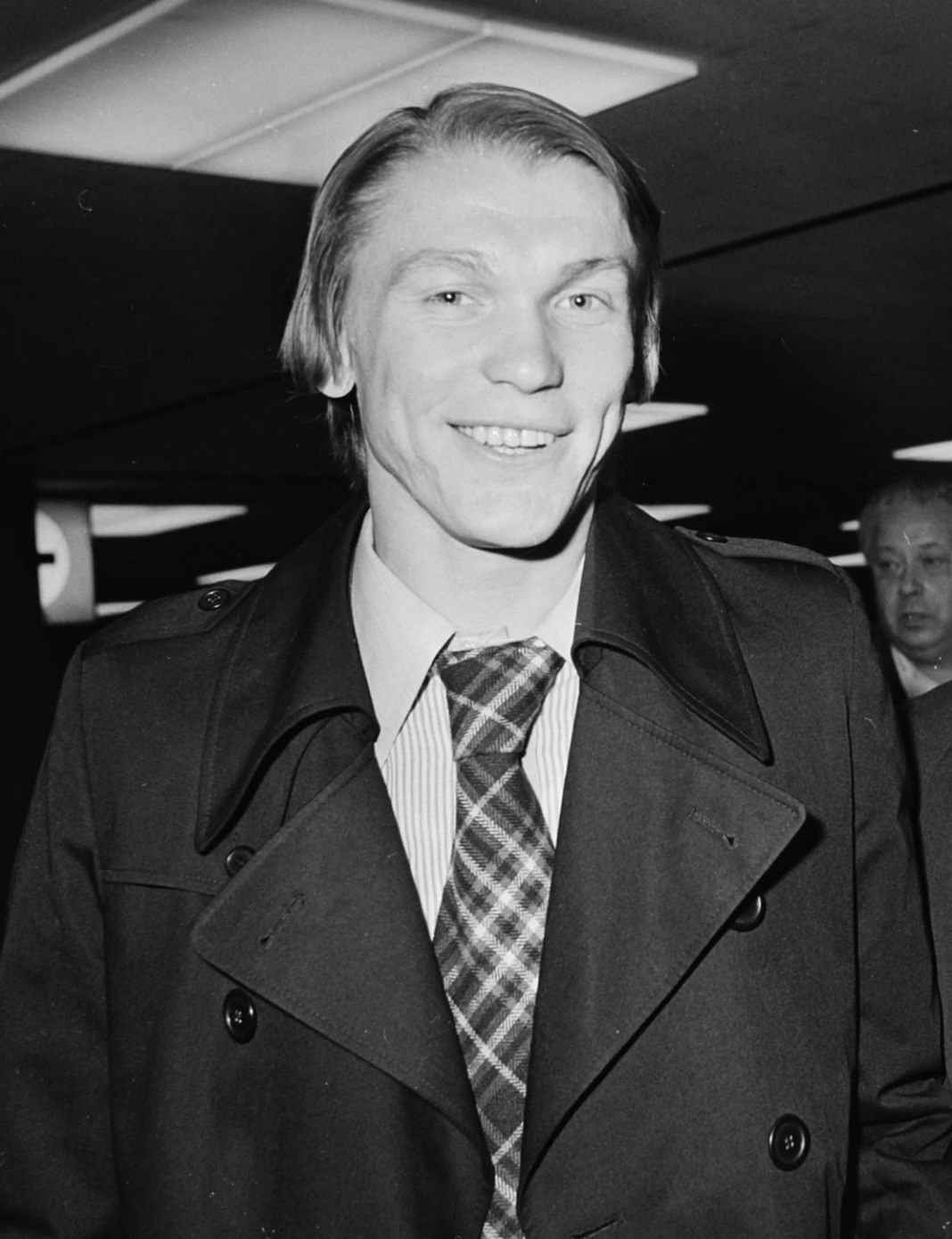
real photographs of 2007, after his withdrawal. Featured: Stefan Meisel, cutout by MarkMysoe, low CC BY 3.0. interior photo: Christophe95, low CC BY-SA 3.0. Web-optimized format. These are free-to-use images with attribution., not in public domain. They are not presented as photographs of their matches in the nineties.