Last update September 23, 2026 by Alberto Llopis
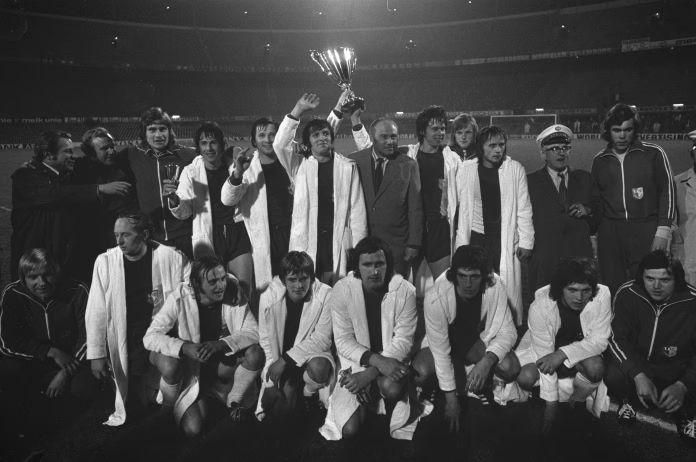
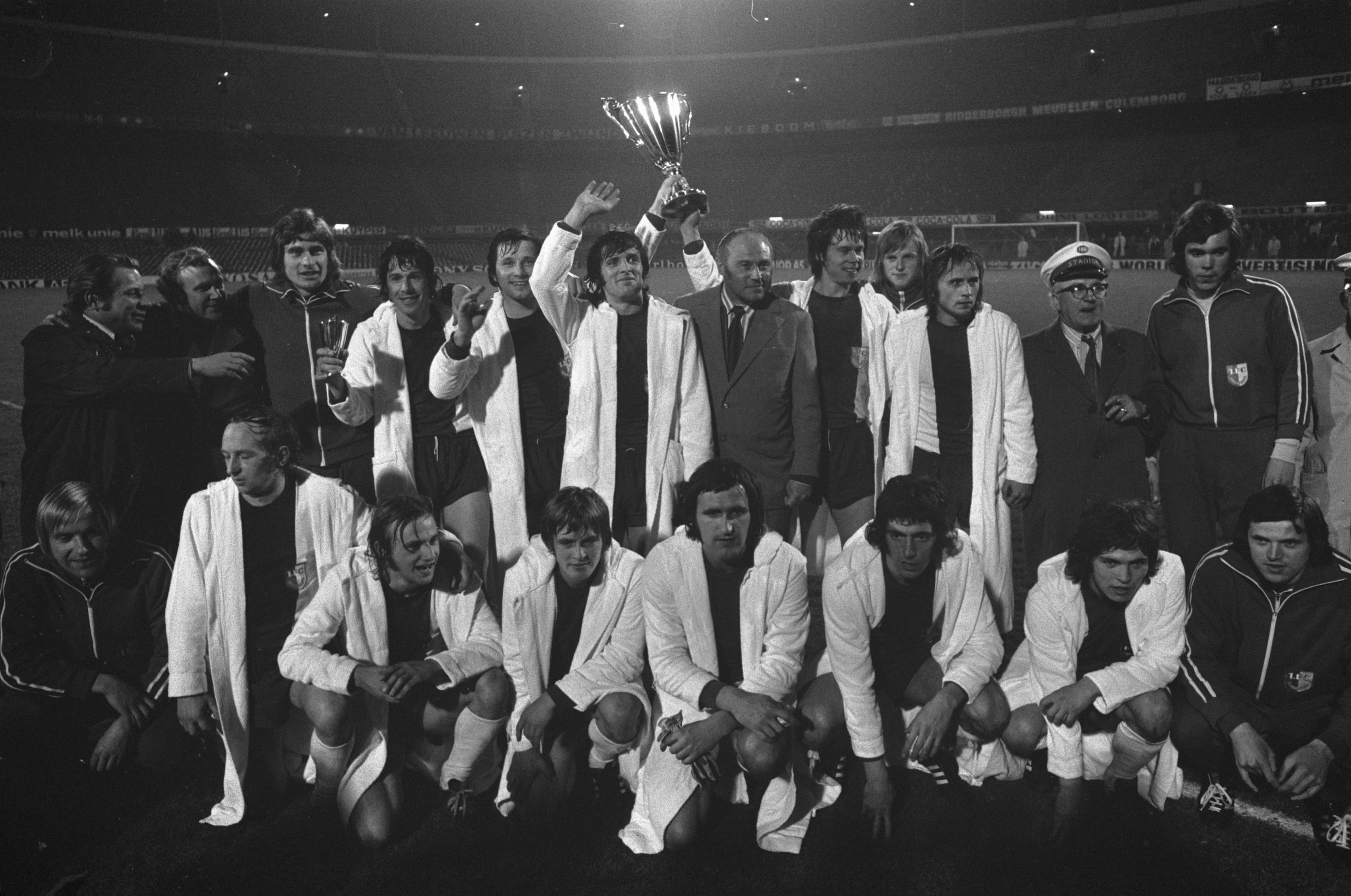
Magdeburg and the Cup Winners' Cup 1974 They starred in one of the greatest forgotten feats of European football. The 8 May of that year, an East German club defeated by 2-0 to the mighty Milan in Rotterdam and became the only team from the GDR to win a major continental competition.
It wasn't Bayern, at Borussia Mönchengladbach, not one of the Soviet giants. Was the 1. FC Magdeburg, representative of an industrial city on the banks of the Elbe, built with footballers from the region and led by a coach who was too independent for the regime.
A European champion that almost no one remembers
When talking about German football 1974, the story seems written in advance. West Germany organized and won the World Cup, while Bayern lifted their first European Cup. Beckenbauer, Müller, Maier, Breitner and Hoeneß became the faces of a power destined to dominate.
But on the other side of the Wall there was also a champion. One week before the Bayern final, Magdeburg won the Cup Winners' Cup. Not even Dynamo Berlin, linked to the Stasi, neither Dynamo Dresden nor Carl Zeiss Jena managed to match it later.
The victory was left out of the Western narrative and did not comfortably survive the disappearance of the GDR.. The country ceased to exist, their league was absorbed and many clubs lost players, resources and relevance. The champion ended up separated from the world that had given meaning to his feat.
Heinz Krügel, the architect of Magdeburg
The man who built that complex was Heinz Krügel. He came in 1966, after the club was relegated from the DDR-Oberliga, and got immediate promotion. From there he built a team based on the quarry, youth and a tactical flexibility not compatible with the cliché of East German football.
Krügel could not go to an international market or sign stars. He worked with footballers around him: Jürgen Pommerenke, Axel Tyll, Klaus Decker, Detlef Raugust, Martin Hoffmann, Wolfgang Seguin and Jürgen Sparwasser. In 1972 Magdeburg won its first league; A year later he won the GDR Cup and obtained a ticket for the Cup Winners' Cup..
The team had physical strength, but also technique and mobility. Pommerenke set the pace, Seguin provided a journey, Hoffmann attacked the spaces and Sparwasser was a constant threat. It was a generation with an identity as recognizable as that of the Ajax the 1995, although born in a completely different context.
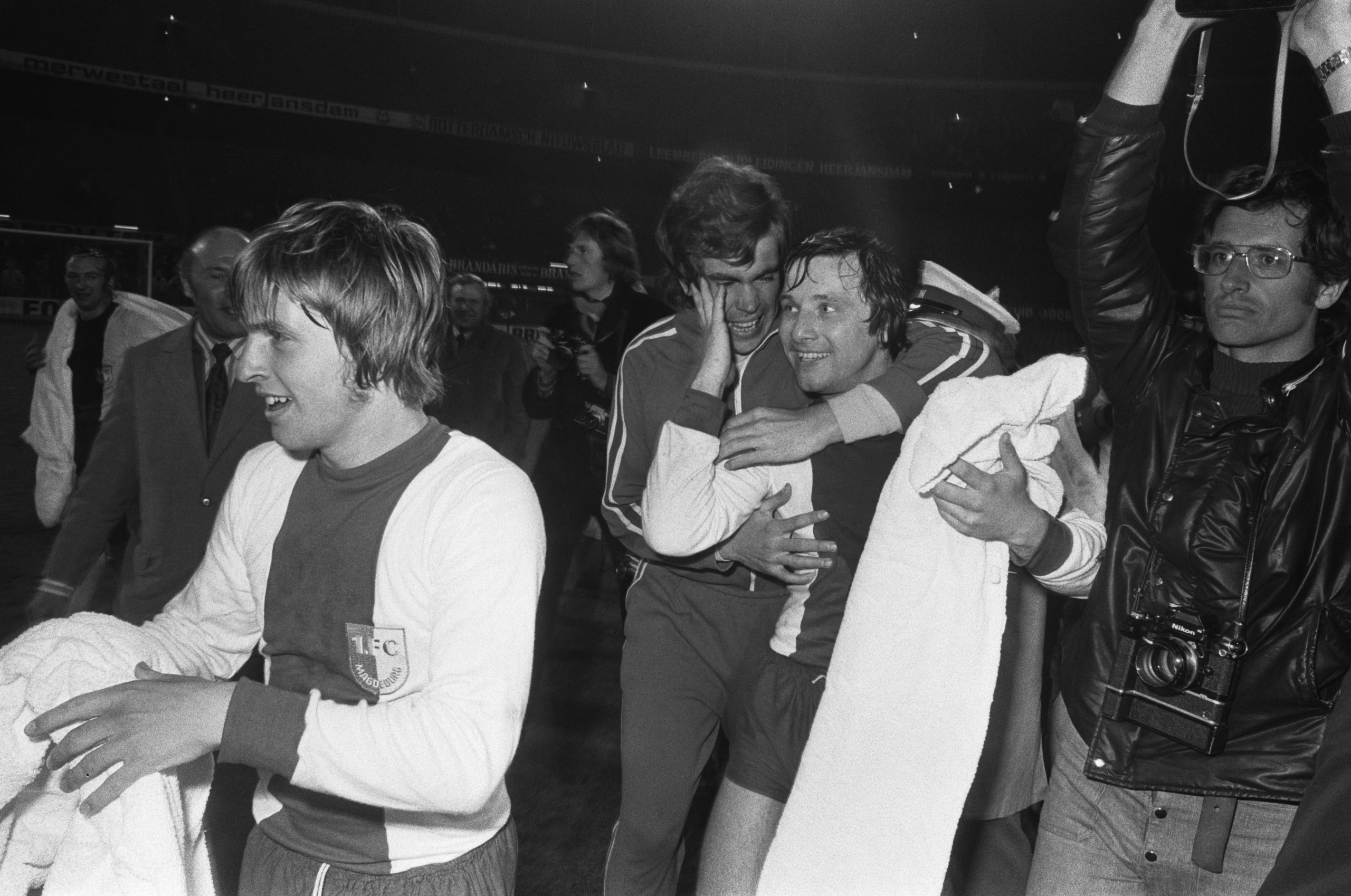
The road to the Cup Winners' Cup final
The adventure began against NAC Breda. Magdeburg tied 0-0 in the Netherlands and resolved the tie with a 2-0 at home. Then came Baník Ostrava, he beat 2-0 in Czechoslovakia. The East Germans needed extra time to come back 3-0 an el Ernst-Grube-Stadion.
In the quarterfinals they beat Beroe Stara Zagora and in the semifinals they met Sporting de Portugal. The 1-1 from Lisbon left everything open. On lap, in the rain and in front of a full stadium, Krügel's team won 2-1. Pommerenke scored very early and Magdeburg held out until completing the trip to Rotterdam.
His journey was that of a solid champion: four rounds, no defeat at home and ability to survive both a comeback and close games.
Milan arrived from another world
Milan represented everything that Magdeburg was not. He had won the European Cup in 1963 Y 1969, and was the current Cup Winners' Cup champion. Contaba with Gianni Rivera, Ballon d'Or 1969, besides Schnellinger, Benetti and Chiarugi. On the bench was a young Giovanni Trapattoni.
For a good part of the Western press, Magdeburg was a mystery arriving from the other side of the Iron Curtain. This lack of knowledge ended up working in favor of Krügel's team..
A final against just 4.600 viewers
The final was played in De Kuip, a huge stadium that presented a desolate appearance. Historical figures place attendance around 4.600 viewers, one of the lowest entries in a European final.
Travel from the GDR was limited and controlled. Magdeburg could not bring a large mass of followers and Milan did not mobilize its fans either.. There was not a full stand to amplify the memory: just thousands of empty seats and two teams playing for a continental title.
The plan to turn off Rivera
Krügel had a problem: Klaus Decker was suspended. His replacement was Helmut Gaube, who received the most delicate mission of the night, keep an eye on Rivera. Gaube closed passing lanes, It reduced the Italian's space and prevented Milan from playing at the pace of their number ten.
Magdeburg did not lock itself in. He pressed with order, He moved the ball quickly and forced the opponent to run backwards. The first blow came in the minute 43. Raugust advanced from the right and sent a ball into the area. Enrico Lanzi tried to prevent the shot and deflected it towards his own goal.
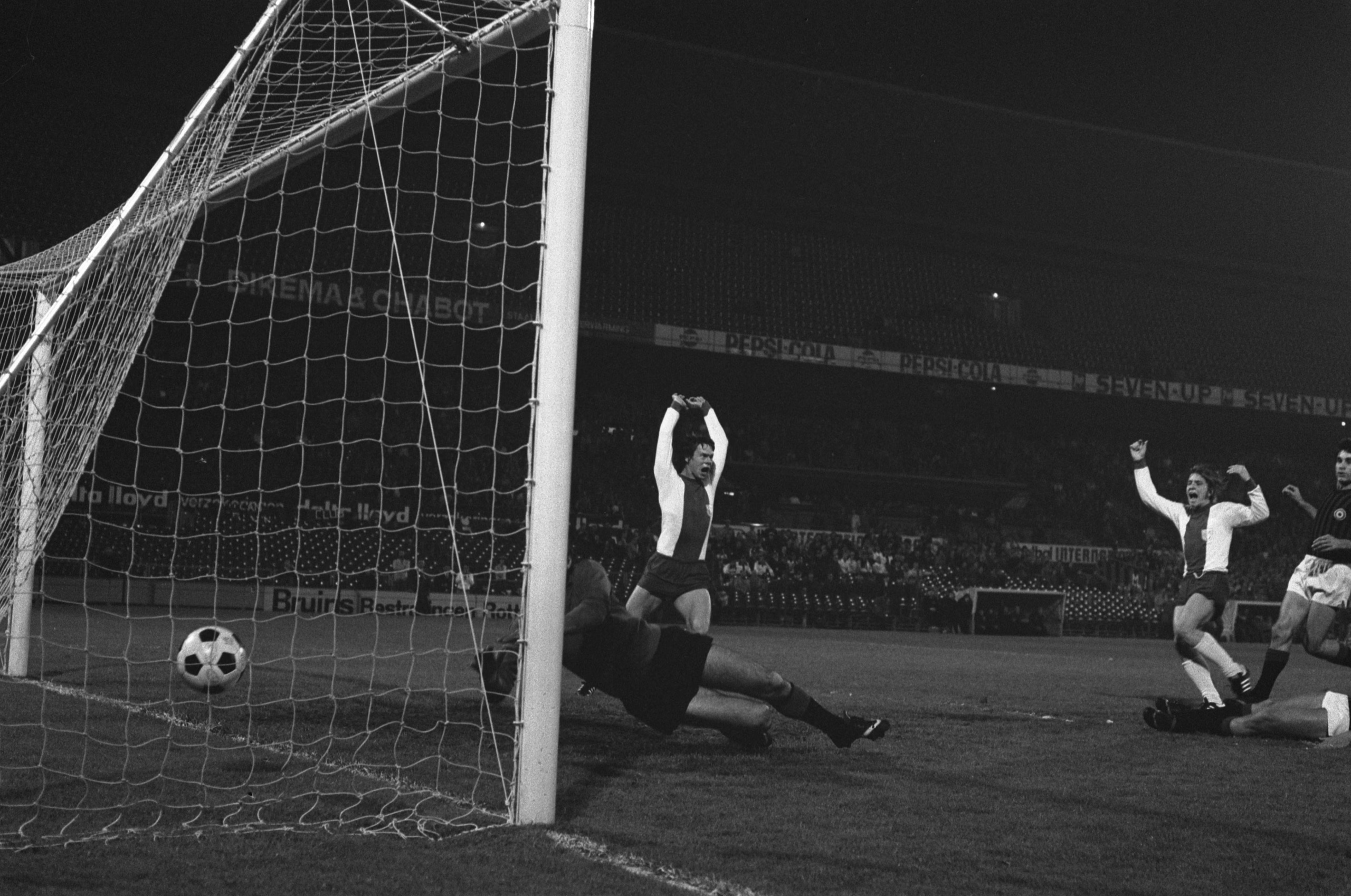
Wolfgang Seguin and the final goal
In the second half Milan tried to react, but he continued without controlling the center of the field. Every minute Italian anxiety increased and the security of the blue team was reinforced.
In the minute 74 the final play has arrived. The attack advanced from the left and the ball ended up at the feet of Wolfgang Seguin. From a closed angle, hit accurately and surpassed Pizzaballa. The 2-0 It wasn't an accident, but an action built by a team that still wanted to attack when it already had the title within reach.
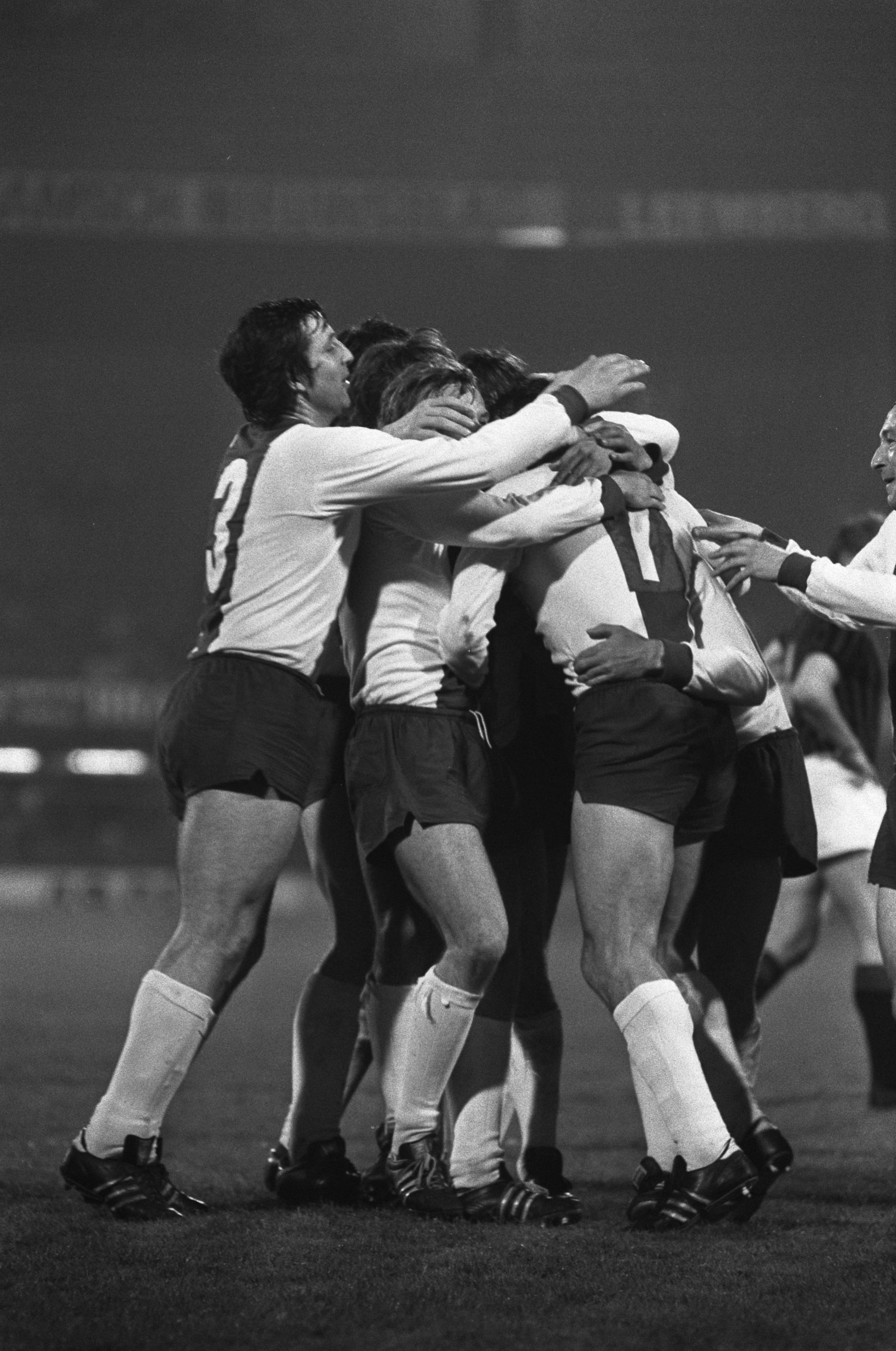
When the referee signaled the end, Magdeburg had become European champions. A club from an East German industrial city had just defeated the reigning champion.
The perfect East German season
The Cup Winners' Cup was not the only success. The team also won the DDR-Oberliga and completed the best season in its history. A year later he would be crowned league champion again..
The victory also came in the great year of the two Germanys. Bayern won the European Cup, West Germany won the World Cup and East Germany won 1-0 its western neighbor with a goal from Sparwasser, Magdeburg striker.
The Super Cup against Bayern that was never played
The champion of the European Cup and the winner of the Cup Winners' Cup had to face each other in the Super Cup of 1974. The duel would have brought together Bayern and Magdeburg a few months after the World Cup clash between the two teams.
It was never disputed. The official explanation was the lack of compatible dates, although it is difficult to separate the cancellation from the political context. That Bayern-Magdeburg remained one of the great imaginary matches of the seventies.
Krügel against the system
Glory did not protect Heinz Krügel. In 1976 was removed and received a ban from training in the GDR elite. was independent, disputed political interference and refused to obey. The system celebrated its victory and then expelled the man who had made it possible.
Krügel ended up doing minor jobs away from the benches. His story remembers how football in the East was crossed by political decisions, just as it happened with other generations that disappeared from the map, as the Yugoslavia that never played the World Cup 1994.
From European champion to victim of reunification
The real collapse came after the fall of the Wall. The eastern clubs entered a much richer system without equivalent resources. Their best footballers were recruited by Western teams and entire financing structures disappeared..
Magdeburg did not manage to enter the higher professional categories of the new German football. He spent years in regional divisions and reached the fourth level. While Milan accumulated new European Cups, the club that had defeated him was fighting to survive away from the great showcase.
Why it deserves to return to the great story
The Magdeburg champion of the Cup Winners' Cup 1974 shows that European football was more open and unpredictable than the present suggests. A young team, built with players from your region and led by a brave coach, could reach a final and knock down Milan without a fortune or a collection of international stars.
That night was the result of years of quarrying, tactical work and confidence. It was also the highest point of a football that political history ended up dismantling.. The 8 May 1974 remains proof that Magdeburg was not a Cold War curiosity, but a true European champion.
Frequently asked questions
What did Magdeburg win in 1974?
Won the European Cup Winners' Cup 1973/74 and the DDR-Oberliga, completing the best season in its history.
Who did you defeat in the final?
To AC Milan for 2-0 and De Kuip, Rotterdam, the 8 May 1974.
Who scored the goals?
The first was an own goal by Enrico Lanzi and Wolfgang Seguin scored the 2-0 definitive.
Why was it so important?
Because Magdeburg became the first and only club from the former East Germany to win a major European competition.
Historical photographs by Bert Verhoeff/Anefo, National Archives, transferred to the public domain through CC0. Original tokens and declaration of rights: team with the Cup Winners' Cup, Krügel and the players, first goal Y second goal celebration.