Last update September 12, 2026 by Antonio Sanchez
Last update: 12 September 2026.
There are names that are not remembered only for what they won, but for what they seemed to announce. Footballers who promised to be legends, players who during an afternoon, a season or a youth tournament made them believe that the future belonged to them. They weren't just good.: They seemed to bring a new way of playing, a distinguished regatta, an impossible stride or that look of someone who still doesn't know that everyone is placing too great an expectation on them.
Retro football is full of those races that left a question floating. What would have happened if the knee had held? If the environment had been different? If the club had been patient? If that boy had not grown up with a camera in front of him before learning to live with the failure? This article is not about pointing out failures. It's about looking with affection and context at players who were bigger than their final record., because for a time they made us imagine something enormous.
Why these footballers continue to generate nostalgia
Football nostalgia does not live only on champions. He also lives on promises. Of t-shirts that were sold ahead of time, of covers with words like “new Maradona”, “new Pelé” or “future Ballon d’Or”, of those Sunday highlights where a kid made two dribbles and it seemed like we had just seen the birth of an era.
In the years 90 and first 2000, that feeling multiplied. global television, video games, the cards, The first internet pages and the transfer market turned many young talents into myths before becoming consolidated. Today it is convenient to look back without cruelty. Some won important titles. Others played in huge clubs. But everyone shares something: The collective story expected an absolute legend and reality ended up writing a more human story.
In Retro Football we have already talked about players with the greatest projection in the years 90 and of cult players of the years 90. This text goes one step more intimate: focuses on that border between promise and melancholy.
Denilson de Oliveira: the dribble that cost a fortune
Denílson was pure Brazilian electricity. Before football became obsessed with the efficiency of each touch, He played as if the ball were a top and the opposing full-back was an excuse to improvise.. At the World Cup in France 98 It already appeared as a bench fantasy: fast legs, rubber waist, overflow outside and inside. He was the type of player who forced the viewer to sit up on the couch.
When Betis paid a historic figure for him in 1998, The signing seemed like a declaration of intent. Sevilla was going to have one of the most unbalanced footballers on the planet. And Denílson left beautiful nights, dribbles that are still remembered and an iconic presence in a League full of forwards, midfielders and wingers with personality. But the most expensive transfer tag weighed like a stone. Your football, so beautiful to remember, It didn't always fit what was required of a total star.
He ended up being world champion with Brazil in 2002, something that many never achieve, but the popular sensation was different: that that infinite dribble could have dominated Europe. That's why its name continues to work so well in a retro key.. Denílson was a spectacle, promise, excess of market and nostalgia for a time in which a winger could justify a tackle just by facing the same defender three times.
Sebastian Deisler: the German talent that was broken inside and out
With Sebastian Deisler you have to write carefully. It was not a case of carelessness or whim. It was an injury story., pressure and mental health before football knew how to talk about mental health naturally. Germany saw in him the player who could modernize a team in transition: technique, hit, break, vision and an elegance that was not always associated with the German cliché of those years.
Deisler moved to Borussia Mönchengladbach, Hertha and Bayern. Every time I managed to chain matches, the same impression came back: this boy has something different. But the body was closing doors. Knees, relapses, breaks, anxiety, Depression and enormous media pressure ended up pushing him into an early retirement. In 2007, with only 27 years, he said enough.
Your case dialogues very well with our article on great footballers who had to retire due to injuries. Deisler did not stay by the way because he lacked football. He stayed because sometimes football demands more than a person can bear.. and that truth, with the years, has made him even more respected.
Freddy Adu |: when a promise grows in front of the whole world
Freddy Adu was the perfect example of a time that began to sell the future as if it were the present. He debuted in the MLS with 14 years, appeared in advertisements, interviews and covers, and received an impossible comparison: the “new Pelé”. There was no teenager capable of carrying that without something deforming along the way..
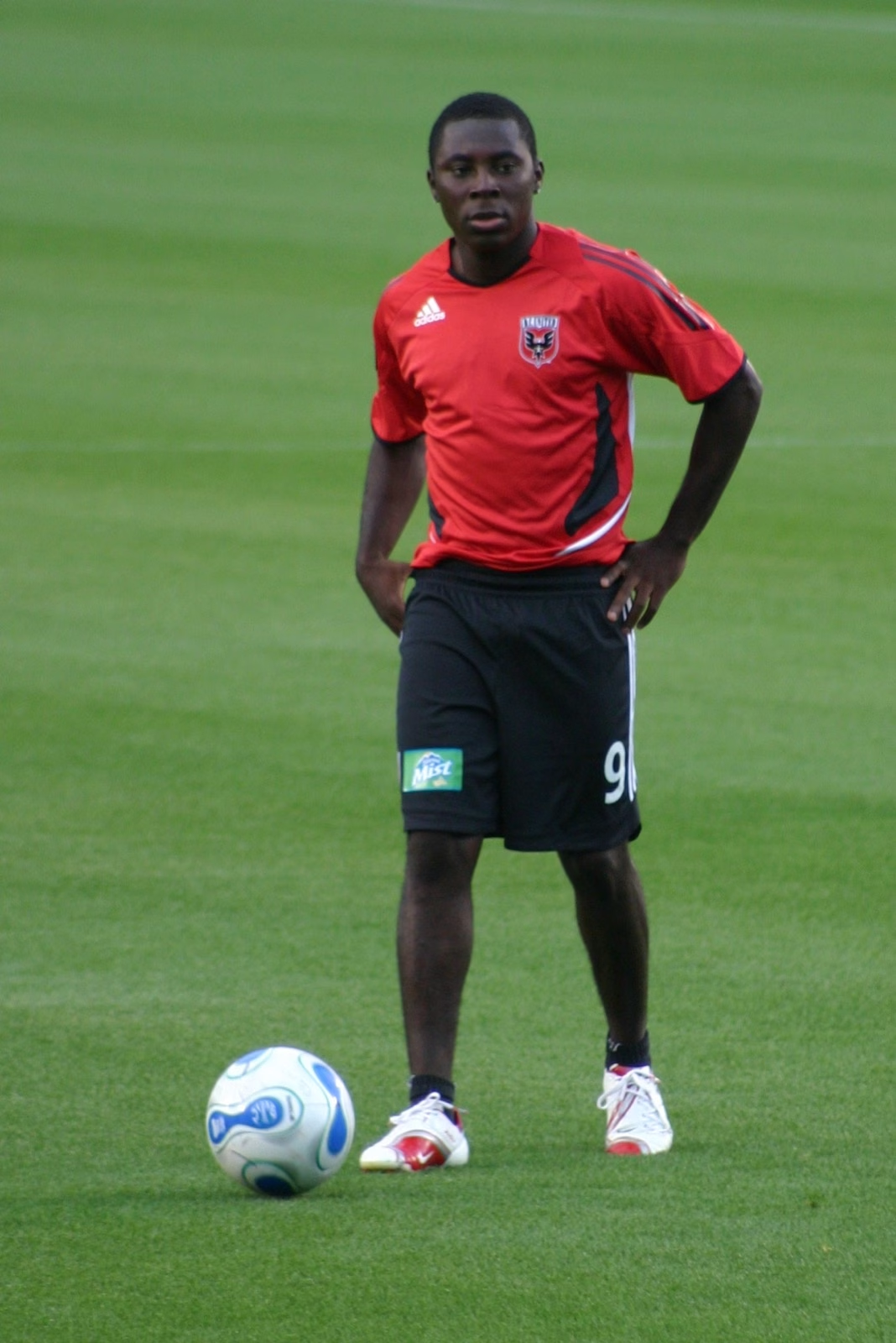
Adu had talent, of course. Driving, nerve, quick touch and that confidence of the boy who has been superior to everyone in lower categories. But the career path is not a clean staircase. He went through DC United, Benfica, assignments and adventures in different countries. Each new destination seemed like another opportunity to recover the original story, and each pause made the noise of that early comparison bigger.
His story helps us understand how the machinery of modern football changed.. Before, a promise could grow in the shadow. Adu grew up with the spotlight on him since he was a child. And when the myth arrives before the adult footballer, any real race seems small, although it has been extraordinary for him 99% of professional players.
Javier Saviola: the rabbit that looked like heir to a dynasty
Javier Saviola was not a minor footballer. That should be made clear.. Shined in River, arrived at Barça, played for Real Madrid, passed through Benfica, Málaga, Olympiacos and was an Argentine international. But whoever saw him appear with River understands why he is on this list. Saviola didn't just look like a promising striker: He seemed like one of those Argentine attackers destined to mark a decade.
I had a change of pace, smell, mobility and a natural relationship with the goal. In youth categories he was an absolute star, and his landing at the Camp Nou came surrounded by enthusiasm. But Barça in those years was a difficult place, full of emergencies, coaching changes and institutional noise. Saviola left goals and beautiful games, but he did not become the global icon that many expected.
Over time, his career gains nuances. It was not a lost promise: It was a promise that did make a career, but not the gigantic career that seemed written in his early years. That's precisely where the nostalgia is.: remembering the boy from River and the young man from Barça, little, fast, with the look of not having finished leaving the pasture.
Ariel Ortega: dribbling, character and a very Argentine melancholy
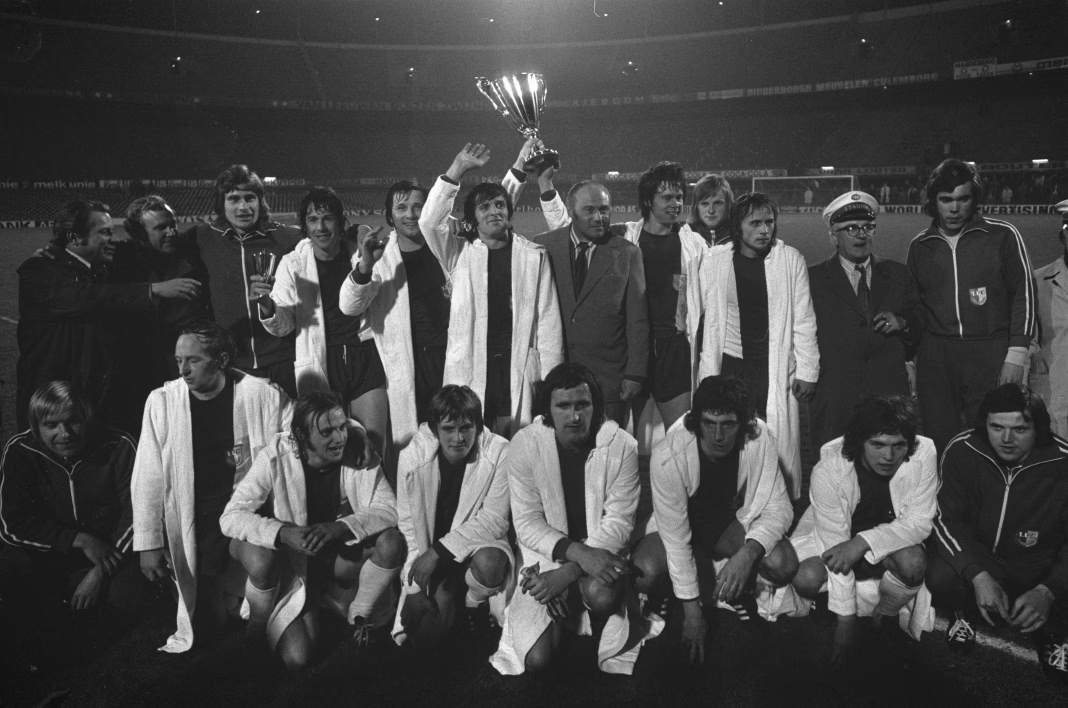
Ariel Ortega had something that cannot be trained. The ball fell to his foot and the game changed temperature. In River he appeared with that mixture of impudence, skill and aesthetic fragility that Argentina usually recognizes immediately. It was inevitable that they would look at him with Maradona's mirror too close. and that mirror, Aberdeen players with the Cup Winners' Cup, burning.
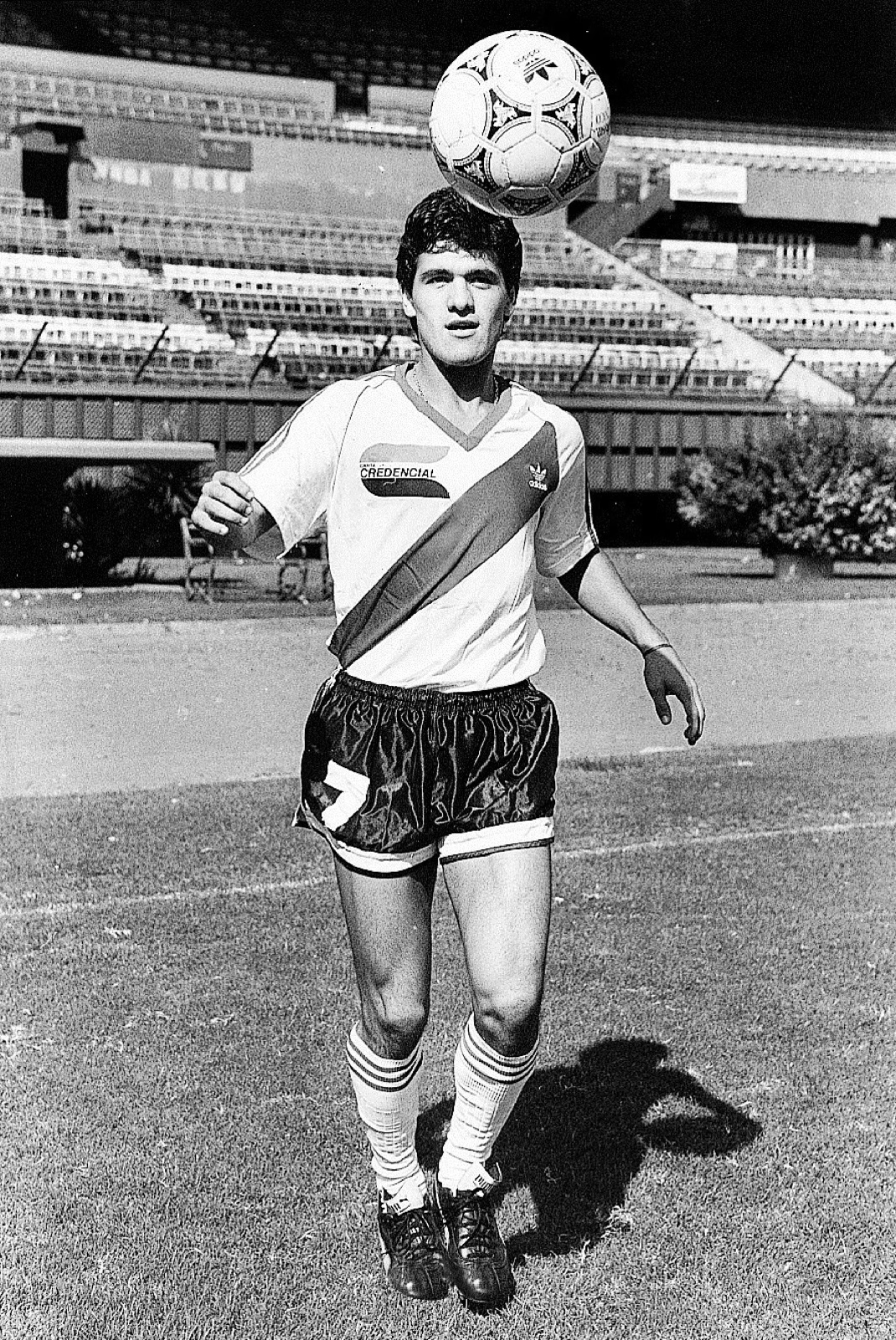
Ortega left a huge mark on River and brilliant moments with Argentina. He also had irregular European steps through Valencia, Sampdoria and Parma, and a career marked by personal ups and downs. His expulsion against the Netherlands in France 98 It remained like a bitter postcard of a footballer made of inspiration and outburst.
But reducing it to that would be unfair.. Ortega was one of those players who gave identity. I didn't play to please the algorithms or to organize statistics: He played as if football were a conversation with the neighborhood. That's why he continues to be remembered fondly.. It was not the world legend that some imagined, but it is an emotional legend for those who understand the dribble as a form of memory.
Robinho: the heir of Santos who found too many crosses
Robinho left Santos with enormous expectations. In Brazil they talked about magic, of bicycles, of joy, of a new star capable of connecting Pelé's past with the global football of the 21st century. When he signed for Real Madrid in 2005, many thought that the Bernabéu was receiving a future Ballon d'Or winner.
Had fantastic nights, dribbles that seemed drawn on a futsal court and an amazing ease in accelerating from a standstill. Then came Manchester City, Milan and other roads. His career had titles, fame and great moments, but he never finished becoming that total figure that his first Santos promised.
On a website like this, Robinho also allows us to talk about an aesthetic: that of Brazil at the beginning of the 2000, highlights football, bicycles and smiles, when every skilled young Brazilian arrived in Europe with a backpack full of impossible comparisons.
Ricardo Quaresma: trivela as religion
Ricardo Quaresma may not be a case of lost promise, but of lateral genius. His career was long, had moments of very high level, He shone in Porto and ended up leaving a technical gesture associated with his name: the trivela. But when he appeared at Sporting and signed for Barcelona in 2003, He was seen as one of the great extremes of the following decade.
Quaresma had a dribble, outer center, personality and a way of playing that seemed to argue with logic. He could make a coach desperate and make a crowd fall in love with him in the same play.. In today's football, so neat, his memory has some romantic resistance: the player who preferred to try the difficult because the difficult could also be beauty.
His career may not have been linear., but he did leave a cult. And that connects directly with the spirit of those PC Football signings what one did by intuition, by name, for a video seen at dawn or for a promise read in a magazine.
Adriano: the Emperor who made the world tremble
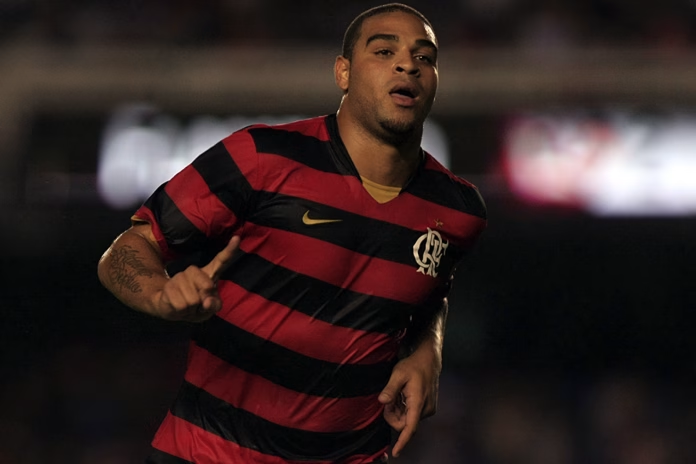
Hadrian was, during a stretch, one of the most intimidating forwards on the planet. Very violent left foot, powerful career, tank body and soul of a child playing in the street. At Inter and with Brazil he seemed destined to occupy the throne of the great nines of his generation. It wasn't just a goal: it was presence. The center backs did not defend him, they survived it.
His story hurts because it is not explained with a simple “he was lost.”. Adriano suffered a huge family blow with the death of his father, and he himself has spoken over the years about how that changed his life. Football, which often demands performance without asking what is happening inside, He did not always know how to accompany that emotional fall.
That's why Adriano is one of the most beloved names on this kind of lists.. Because during its peak it was truly imperial. Because his goals still seem stronger than the net. And because its story reminds us that behind every promise there is a person, with losses, fears and silences that do not fit in a technical sheet.
Quick table: promise, imagined ceiling and reality
| Player | What I promised | What he left |
|---|---|---|
| Denilson | A dominant Brazilian winger in Europe | Unforgettable dribbles, Betis, Brazil and a career that is more aesthetic than constant |
| Sebastian Deisler | The great German talent of his generation | Eternal respect for a career slowed by injuries and pressure |
| Freddy Adu | | The symbol of the future of American soccer | A warning about selling a child as a global myth |
| Javier Saviola | An Argentine heir to mark an era | goals, big clubs and the feeling that their initial ceiling was even higher |
| Ariel Ortega | An Argentine fantasy with the aroma of a pasture | Gambetas, character and an emotional legend in River |
| Robinho | The Brazilian star called to reign in Europe | Flashes of genius and a less dominant career than expected |
| Ricardo Quaresma | An extreme differential for a decade | Trivela, cult and an unrepeatable way of understanding dribbling |
| Adriano | The most impressive nine of his generation | A brutal peak, memorable goals and a deeply human story |
The retro value of incomplete races
These footballers who promised to be legends continue to attract searches because they activate something very powerful: the memory of the possible. We don't just remember what happened, but what we thought was going to happen. We remember the teenager who read a cover, to the boy who signed Saviola in a video game, to the fan who saw Denílson face on television, who thought Hadrian was going to rule Europe for ten years.
Retro football is not only a museum of champions. It is also an archive of illusions. And in that file there is room for crooked talents, the intermittent cracks, the fragile geniuses and the players who did not reach where the world wanted to take them, but they did leave an image that is impossible to erase.
Frequently asked questions
Were all these footballers failures??
No. Many had important careers, They played in huge clubs and won titles. The idea of the article is not to call them failures, but to explain why the collective imagination expected an even greater legend.
Why do so many players from the years appear? 90 Y 2000?
Because that era mixed global television, journals, video games, big signings and exaggerated comparisons. It was the perfect breeding ground to turn a promise into a myth before its time..
Which cases were more conditioned by injuries or mental health??
Sebastian Deisler is the clearest example due to injuries, pressure and mental health. Hadrian also represents a deeply human story, marked by a personal loss that affected her career.
What other articles connect with this topic??
To follow this thread, worth reading about foreigners from the Spanish League 90, cult players Y Robert Prosinecki, another enormous talent seen from nostalgia.
Context sources: biographical sheets of Denilson, Sebastian Deisler, Freddy Adu | Y Adriano.