Last update September 2, 2026 by Antonio Sanchez
Last update: 2 September 2026.
There are footballers who are not remembered only for their titles.. They are remembered for a way of running, for a soaked mane, for muddy black boots, for a shirt that today looks like it belongs in a museum and for that feeling that, when they touched the ball, The game stopped being a game and started to be a scene.
Years 90 They were perfect for making cult players. Soccer was already global, but it wasn't laminated yet. Summaries arrived on television, stickers with impossible photos, monthly magazines, radio narrations and goals seen a thousand times on VHS. It was not necessary for a player to win three Champions Leagues to stay in one. A different afternoon was enough, a World Cup on fire, UEFA Cup, a season in the League, a technical gesture that did not look like anyone else's.
That's why we talk about the best cult players of the years 90 it is not making a cold ranking. It's opening a drawer. Inside there are fronts with mustaches, left hands with poison, goalkeepers who looked like characters from a novel, midfielders who played on foot and guys who perhaps did not dominate an entire decade, but they did dominate our imagination.
What turns a footballer into a cult player?
A cult player is not always the best. Sometimes it wasn't even constant. What you have is something else: an identity that stands the test of time. A recognizable image even for those who did not watch all of his games.. A story that can be told over a table and that still works.
In the 90 That happened frequently because football lived on a beautiful border. It still smelled like an old bleacher., to barro, to manual scoreboards and stadiums without so much digital choreography, but global television was already beginning to appear, the big brands, video games and t-shirts become objects of desire. It was the ideal moment for a footballer to be frozen in memory.
That's where the irregular geniuses come in., national heroes, the rebels, the single-tile artists and the players who made a small club look huge for an afternoon. Not all of them were Ballon d'Or winners., but almost everyone had something that is scarce today: personality without marketing manual.
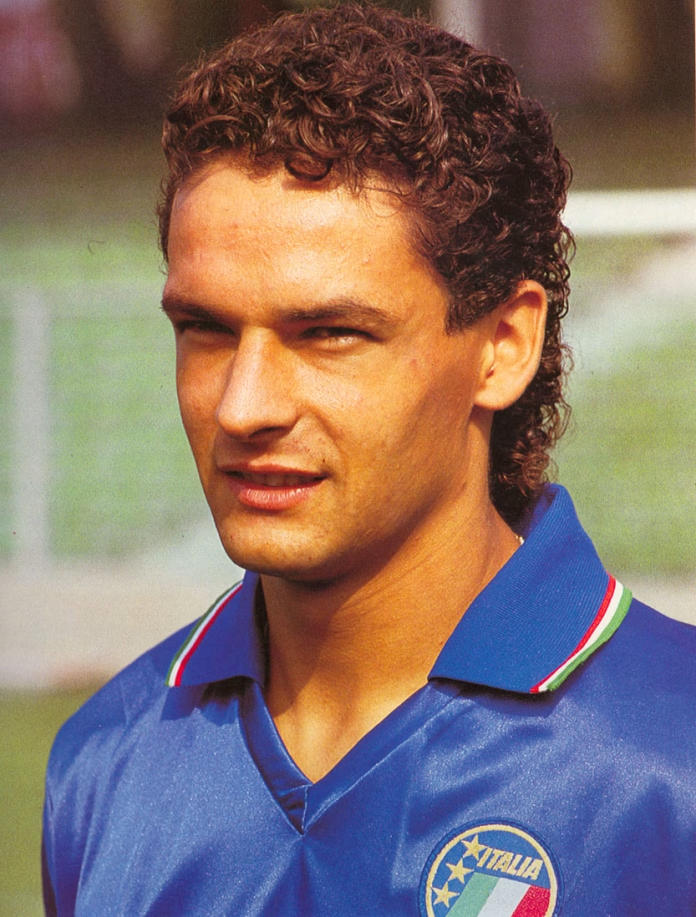
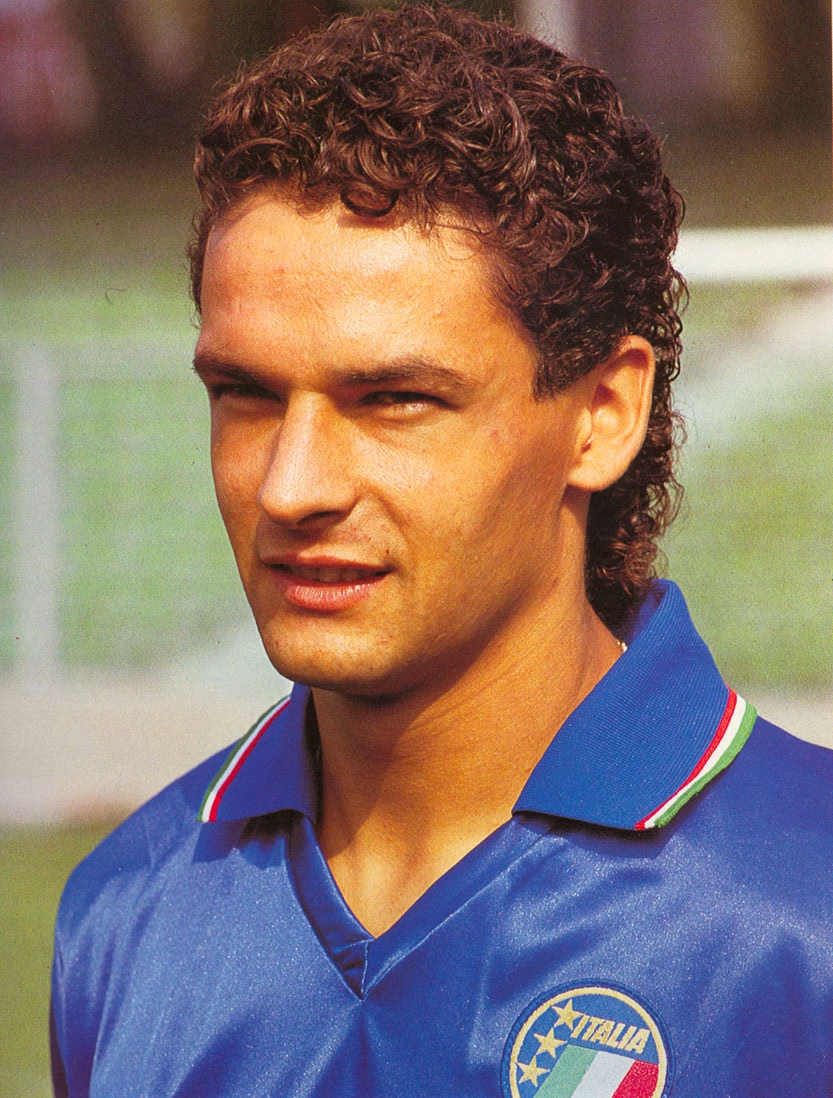
Roberto Baggio: pain turned into beauty
Roberto Baggio is too great to be reduced to a “cult player”, but few footballers better explain this mix of talent, melancholy and memory that defines the years 90. Baggio had a sad elegance. He seemed to always play with an open wound, even when he was inventing an impossible pass or leaving a defender sitting with half a waist.
her ponytail, his way of hitting the ball and that Pasadena penalty in 1994 They turned him into an eternal image. But being left alone with the ruling would be unfair. Baggio was a fantasy at Juventus, poetry in the Italian team and emotional refuge for a generation that learned that football could also hurt in a beautiful way.
In Retro Football we have already talked about Roberto Baggio as one of the great names of Italy, but here it appears for another reason: because even those who don't remember their statistics remember their silhouette. Cast, in retro football, worth gold.
Gheorghe Hagi: the Maradona of the Carpathians
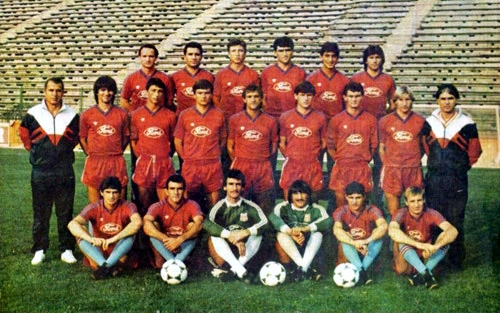
Hagi was a left foot with the character of a volcano. He had that touch of an old footballer who seemed angry with the world and with the ball at the same time.. In Romania it was the flag, At Steaua he was already a huge figure, at Real Madrid he left sparks, in Barcelona too, and at Galatasaray he ended up being a total legend.
But the Hagi that lives in the collective memory is that of the World Cup 1994, when Romania played as if they had discovered a secret door into the tournament. His goal against Colombia, his tense passes, His authority as a captain and that way of looking before hitting made many children learn a name that sounded different: Gheorghe Hagi.
Hristo Stoichkov: the left foot that played with rage
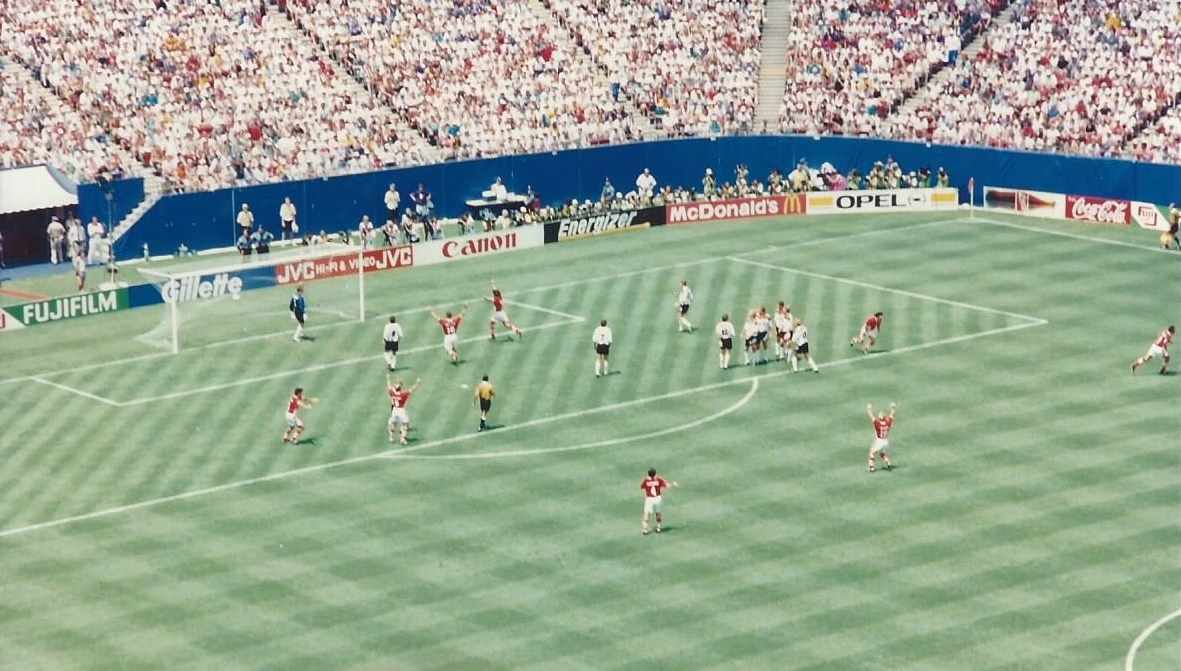
Stoichkov did not ask permission. He entered the game like someone entering into an argument and almost always left leaving a sentence, a gesture or a goal. In Cruyff's Barça it was a knife and dynamite. In Bulgaria it was a national myth. In USA 94 it was a storm.
He had a dry left hand, poisonous, one of those that seemed to have bad intentions even in a short pass. But what made him unforgettable was his emotional temperature. Stoichkov transmitted football without a filter: protest, pride, talent, rage, celebration. One could want it or not., but it was impossible not to look at it.
Carlos Valderrama: football at another pace
Valderrama seemed to play from an invisible hammock. While everyone was running, he looked. While everyone was speeding up, he hoped. Her blonde hair was a flag, Clear, but the important thing was in the feet: a strange pause, a way to hide the ball and make Colombia play to the beat he set.
In the 90, Valderrama was one of those figures who recognized themselves before seeing the number. An open plan was enough. The blonde head in the middle of the field, the yellow shirt, the quiet turn. I didn't need to look modern because it was something else: an orchestra conductor in an era that still allowed midfielders to breathe.
Robert Prosinecki: in it, talent and a hit ball
Prosinecki was one of those players who seemed made for fans to discuss for years. Anyone who saw him in his best days speaks of a wonderful midfielder., technical, until, able to drive as if the ball weighed less for him. Those who focus only on their careers see injuries, ups and downs and a permanent feeling of “it could have been even more”.
There is precisely his cult. in the mix. Prosinecki had something of a street footballer, of a genius who did not need to run more than anyone else because he saw before anyone else. In Spain he left memories at Real Madrid, the Oviedo, Barcelona and Sevilla, and that is why it also fits with that memory of foreigners from the Spanish League 90 that made each day seem like an international album.
You can also follow the thread in our profile Robert Prosinecki, one of those names that explain why Balkan football continues to sound like talent, character and nostalgia.
José Luis Chilavert: the goalkeeper who did not accept being secondary
Chilavert was a goalkeeper, captain, foul taker, shaker and symbol. Today it is still difficult to explain how strange it was to see a goalkeeper walk towards a direct free kick with the authority of a striker.. It was not a fair anecdote: It was a real part of their football..
With Paraguay in France 98, Chilavert took the match against the future champion to an almost cinematic tension. That team defended with tremendous seriousness, but he added personality. had a voice, look and presence. He was one of those players who turned a tie into a duel of character.
Jay-Jay Okocha: fantasy before YouTube
Okocha went viral before viral existed. His dribbles traveled through summaries, ribbons, international goal programs and word of mouth. There was something hypnotic in the way he played.: bicycles, feints, footprints, rhythm changes, an elasticity that seemed improvised and rehearsed at the same time.
The Nigeria of the 90 had color, daring and a generation that earned a place in World Cup memory. In that ecosystem, Okocha was pure joy. If you want to extend that line, It is worth returning to our story about Nigeria 1994 and the Super Eagles, one of the teams that best represents the electricity of that football.
Faustino Asprilla: chaos, speed and crooked smile
Asprilla played as if every play could end in a great goal, in absurd loss or in a scene impossible to forget. And that was part of its charm.. At Parma he was a different striker, largo, elastic, unpredictable. In Colombia he was part of a generation full of football and tragedy.
The “Tino” was cult because it did not seem manufactured. He had that energy of a player who could break a game without asking permission and disappear the next.. The 90 They were full of footballers like that: less domesticated, more human, more contradictory.
René Higuita: football as an act of personality
Higuita did not need a perfect career to be immortal. A way of understanding the goal as a creative territory was enough for him. came out, regatta, risked, he made a mistake and tried again. For many children of the 90, The Colombian goalkeeper was proof that even the most serious position could have some adventure.
The scorpion at Wembley is a global image, but his cult came from before: of that feeling that with Higuita you never knew if you were seeing security or fire. In a time of sober goalkeepers, he chose to be a character.
Dejan Savicevic: the genius who seemed to make no effort
Savicevic had one of those drives that seem slow until it's too late. At Milan he left nights of very high quality, with special memory for the European final of 1994. But his legend also belongs to Yugoslavian football, to that school of technical talent, pride and pause that left an immense nostalgia.
He was a player for patient palates. Didn't always seem on, but when he was he turned the game into something else. There are footballers who impress by force. Savicevic impressed with dangerous finesse.
Djalminha: The League also had its strange artists
Djalminha represents a type of footballer who is greatly missed today: talent with edges. At Deportivo it was magic, character and permanent discussion. I could give an absurd pass, inventing a beach dribble in the middle of the League or complicating your life due to excess of genius.
His place in the cult is not explained by a list of trophies, but by emotional memory. People don't talk about Djalminha like they talk about a statistic. Talk about it like you talk about a specific afternoon, of a play seen in a summary, of a player who made you lift your head off the couch.
Matt Le Tissier and Giorgi Kinkladze: video store cult
Years 90 They were also the decade of footballers who seemed to live far from the big showcase, but that in reality they fed a secret mythology. Matt Le Tissier at Southampton and Giorgi Kinkladze at Manchester City were two perfect examples: enormous talent, clubs not always giants, repeated goals in compilations and an almost sentimental relationship with his hobbies.
Le Tissier scored goals like someone who does not understand the normal laws of balance. Kinkladze drove between rival legs with a smoothness that still today seems like something from another sport.. They were not the most commercial names of their time, but names that a retro fan pronounces with a special smile.
Why do we keep coming back to these names?
These footballers survive because they do not belong just to a statistic. They belong to objects, sounds and scenes: a t-shirt with a wide collar, a sticker changed at recess, a sunday afternoon story, a tape-recorded summary, a foreign name that sounded like promise before seeing him play.
They also have something that modern football tries to create and almost never succeeds.: a true rarity. They were not characters designed to please everyone.. They had edges, silences, boredom, huge days and gray afternoons. That's why they are remembered better. Because they seemed like humans before they were products..
In the end, football memory almost always works with single images. Baggio looking at the ground. Hagi raising his head. Stoichkov running mad. Valderrama stopping time. Chilavert crossing the field to take a free kick. Okocha dancing on the ball. Prosinecki playing as if the stadium smoke was also part of the dribble.
Frequently asked questions about cult players of the years 90
Who was the most important cult player of the years 90?
It depends on the country and the memory of each fan. Roberto Baggio, Hagi, Stoichkov, Valderrama, Chilavert, Okocha and Prosinecki are clear candidates because they combine talent, recognizable personality and image.
Does a cult player have to be less famous than a star?
Not necessarily. Baggio or Stoichkov were world stars, but they are also cult players because their memory goes beyond the record.. They have aesthetics, report, wounds, gestures and an identity that is still alive.
Why the years 90 they generate so much football nostalgia?
Because they were a bridge decade. Soccer was already international and television, but it still retained a more imperfect texture: different fields, daring t-shirts, players less controlled by public discourse and a much more emotional way of consuming matches.
Sources and images used
The images used in this article come from Wikimedia Commons and have been chosen because they have a reusable license sheet: Roberto Baggio in Italy 90, Hristo Stoichkov en USA 94 y Steaua de Bucarest 1989. You can consult the original files in Commons: Roberto Baggio – Italy 90, Stoichkov against Germany in the USA 94 Y Steaua Bucarest 1989.