Last updated June 6, 2026 by Alberto Llopis
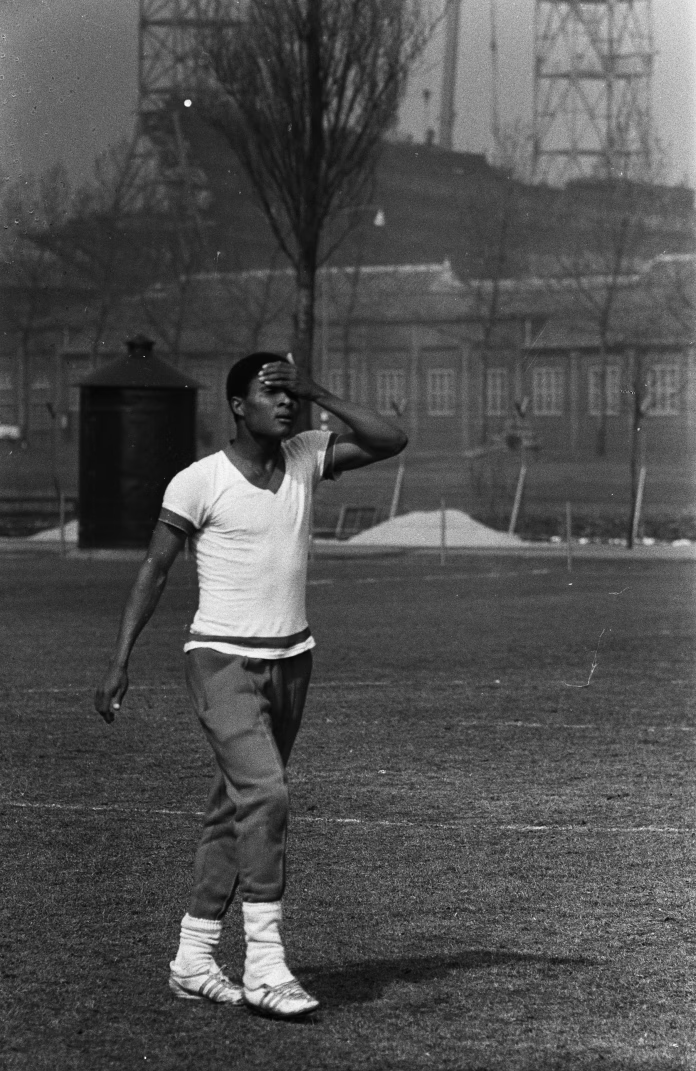
Portugal 1966 It was the World Cup in which a team with little tradition in the elite suddenly appeared on the big map of football. To England 66, Portugal had not played in any final phase of the World Cup. After that summer, no one looked the same at the Portuguese shirt again. The explanation has its own name: Eusebio.
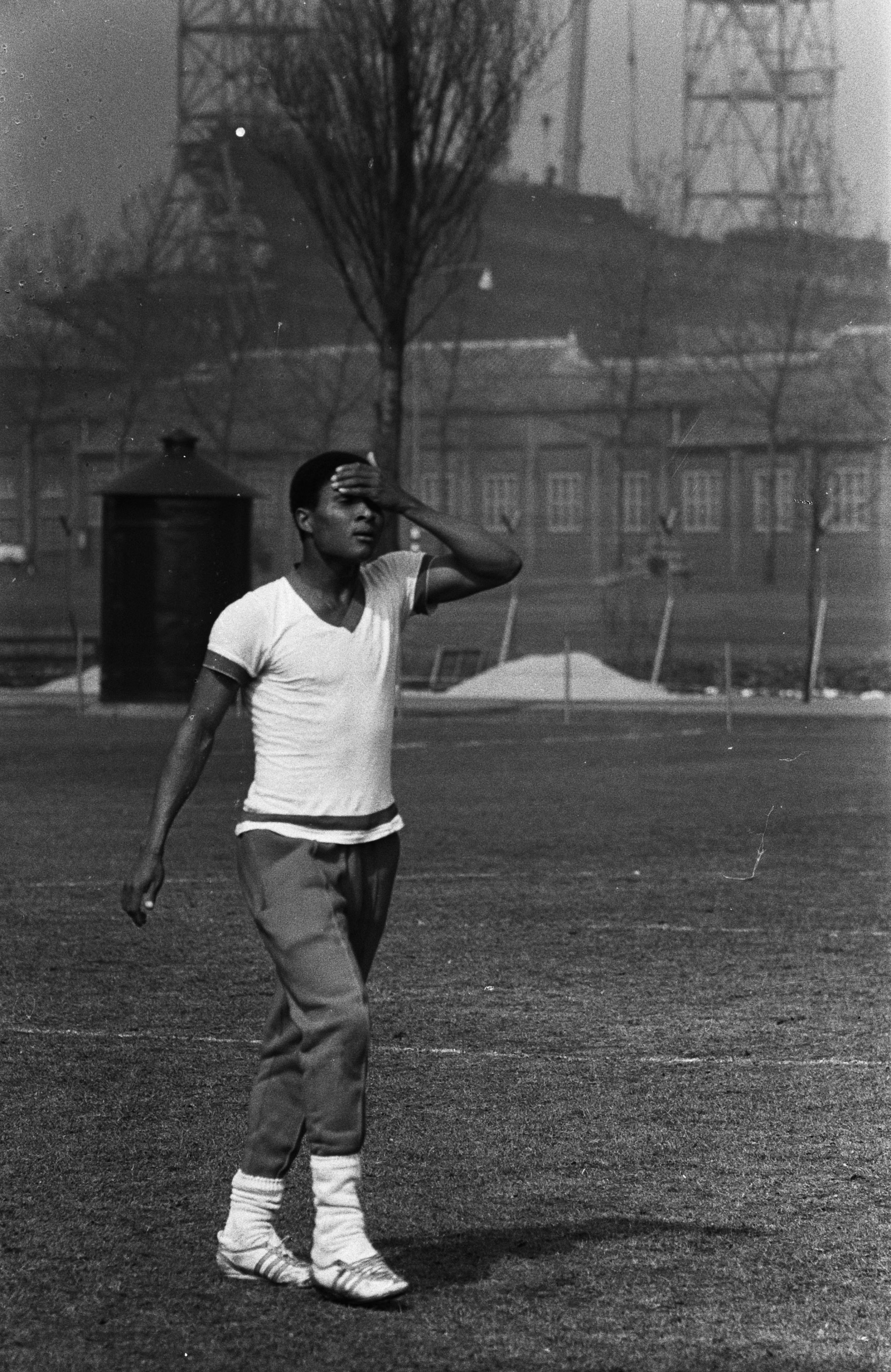
The Mozambique-born striker arrived at the tournament as a Benfica star and emerged as a universal myth. He scored nine goals, He was top scorer and led Portugal to third place. He was not a champion, but its impact was so powerful that that team was forever associated with an idea: Portugal could compete with anyone.
Portugal 1966: the debut that seemed impossible
The story of Portugal 1966 has some late emergence. The country had good footballers and a dominant Benfica in Europe, but the team had never stepped foot in a World Cup. The draw, also, It didn't exactly invite calm: Brazil, Hungary and Bulgaria were waiting in the first phase.
Brazil was two-time world champion and arrived with Pelé, although that World Cup would end up being a nightmare for the Canarinha, how we count in world 1966: all against Pelé's Brazil. Portugal, instead, soon found a perfect mix of order, confidence and punch.
He beat Hungary, beat Bulgaria and finished the group with a victory against Brazil. That victory had enormous symbolic value. It wasn't just passing the round: was to eliminate the current champion and announce that the Portuguese team was not there as a decorative guest.
Eusebio: nine goals and enormous authority
The great face of Portugal 1966 It was Eusebio. Its power, His hitting and his way of attacking spaces seemed designed for a short tournament. In a time of tough defenses and heavy fields, He accelerated each play with brutal naturalness.
His nine goals gave him the World Cup Golden Boot. But his influence went beyond the figure. Eusébio was a constant threat, emotional leader and symbol of a team that felt capable of looking historical powers in the eye.
That is why his name continues to appear in any review of top scorers in World Cup history. There are players who score many goals and others who define a tournament. Eusébio did both.
The comeback against North Korea
The most famous match was the quarterfinal against North Korea. The Asians had just signed one of the great World Cup surprises by eliminating Italy, a story that already has its own place in North Korea and its great feat in the World Cup in England 1966.
The duel started as a nightmare for Portugal: 0-3 down. In many World Cups, that would have been a sentence. But Eusébio turned the match into a work of offensive resistance. He scored four goals and Portugal ended up winning 5-3. The comeback not only saved the team; it rose to legend.
That meeting sums up the magnetism of Portugal 1966: a debut team, a gigantic star and a night in which football seemed to have no emotional ceiling.
The semi-final against England and third place
England was waiting in the semi-finals, host and future champion. Portugal fell 2-1 in Wembley, again with a goal from Eusébio. It was a worthy defeat, but also bitter, because the team had shown sufficient level to dream of the final.
Then came the third place match against the Soviet Union. Portugal won 2-1 and closed the best World Cup in its history until then. That third place was much more than a result: It was the founding document of Portugal as a prestigious World Cup team.
For decades, every Portuguese generation lived with that comparison. Eusébio and his team left a very high bar, same as others great teams that never won a World Cup but they remained in the collective memory.
Why Portugal 1966 remains eternal
Portugal 1966 It still works because it has all the ingredients of a classic story: debut, surprise, estrella, comeback and honorable defeat. He was not a champion, but a team that changed the self-esteem of a football country.
It was also the World Cup that placed Eusébio on the global altar. Before he was a huge figure in Europe; after england 66, became part of the history of the World Cup. According to the record of the World 1966, Portugal finished third and Eusébio was top scorer.
That's why this article doesn't just talk about an old tournament.. He talks about the moment when Portugal began to imagine itself as a power. Sin Portugal 1966, Figo's later history, Rui Costa, Cristiano Ronaldo or the Euro Cup 2016 is understood worse. Every great story needs a first flame, and the Portuguese burned in England with Eusébio as the main fire.